

Last Updated: November 4, 2026
Quick Summary
To measure for custom gothic clothing at home, use a soft tape and record your bust, waist, hips, shoulder width, sleeve length and garment length in centimetres, taking each measurement twice. Measure in the underwear you plan to wear, and state whether you want a fitted or loose fit when you order.
- Use a soft, flexible tape measure, not a rigid metal tape or stiff ruler.
- Take each measurement twice, since differences of a few millimetres are normal.
- Measure over the underwear you plan to wear with the garment.
- Stand naturally and avoid holding your breath or sucking in your stomach.
- Record the garment length separately, noting whether you want the hem at the floor, ankle or knee.
Table of Contents
- What You Need Before You Start Measuring
- Step-by-Step: How to Measure Your Body at Home
- Custom Gothic Dress Measurements: Garment-Specific Requirements
- Goth Clothing for Men Measurements: What to Record
- How to Measure Over or With Undergarments and Understanding Ease
- How to Measure for Custom Gothic Clothing Online and Compare with a Size Guide
- Custom Gothic Clothing Size Guide: Troubleshooting Between Sizes and Verifying Your Numbers
- Submitting Your Measurements for Your DevilGothic Order
- Frequently Asked Questions
Getting your measurements right is the single biggest factor in whether custom gothic clothing fits well. Made-to-order garments are cut to your numbers rather than a standard size, so a small error in a measurement carries straight through to the finished piece. Learning how to measure for custom gothic clothing at home takes about fifteen minutes and saves the disappointment of a coat that pulls across the shoulders or a corset that gapes at the waist.
Custom tailoring removes the guesswork of standard sizing. Instead of choosing between a size 12 and a size 14, you give the maker the actual dimensions of your body and the garment is built around them. That precision is the main advantage of ordering made to measure, and it only works if the numbers you submit are accurate.
Many gothic and alternative shoppers are used to inconsistent sizing across brands. A medium from one maker can fit like a small from another, so comparing labels tells you very little. Your own measurements are the one fixed reference you can rely on, which is why they matter more here than in ready-to-wear shopping.
What You Need Before You Start Measuring
Before you pick up a tape, gather a few simple tools so the numbers you record are reliable. A soft, flexible tape measure is the right tool for this. A rigid metal tape or a stiff sewing ruler will not follow the curves of your body and will give you false readings.
You will also need a pen and paper or a notes app, a full-length mirror, and a helper if you can find one. Measuring your own back, the length of a sleeve, or the nape-to-waist distance is much easier with a second person.
Wear the underwear you would wear under the garment, or go without if you intend to wear the piece over thin clothing. Stand naturally with your feet together and your weight evenly distributed. Avoid holding your breath or sucking in your stomach, because a tense measurement will make the finished garment feel tight.
Finally, set aside a quiet room with good lighting, and take each measurement twice. Small variations of a few millimetres are normal, but a large difference between two readings usually means the tape has slipped or you have moved.
Step-by-Step: How to Measure Your Body at Home
Work through the measurements in a consistent order, from the top of the body down. Keep the tape level all the way around and snug without compressing the skin. Record each figure in centimetres and inches, and note the unit you used so there is no confusion later. The walkthrough below gives the tape placement, posture, and common mistakes for each core measurement so you can submit numbers a maker can cut to.
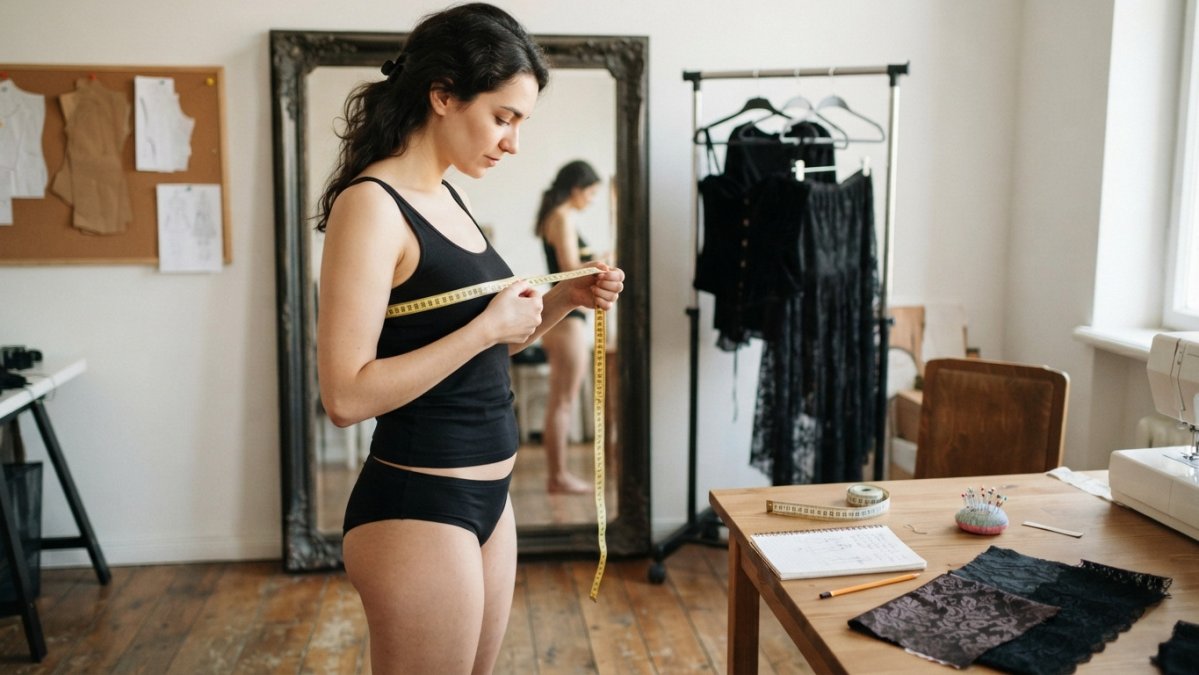
Bust or Chest Measurement
Stand with your arms relaxed at your sides and breathe normally. Wrap the tape around the fullest part of the bust, keeping it horizontal across the shoulder blades at the back. Check in a mirror that the tape sits at the same height all the way round; a tape that dips at the back will read small. For a structured corset or tailcoat, many makers also ask for the underbust, taken directly under the bust where the band of a corset would sit, and sometimes the overbust at the widest point. Watch out: pulling the tape tight enough to compress the bust will produce a garment that feels restrictive across the chest.
Waist, Hip, and Height Measurements
Find your natural waist by bending gently to one side; the crease that forms is where to measure. Stand tall and exhale normally before reading the tape, and keep the tape parallel to the floor. For hips, measure around the widest part of the seat, usually a few inches below the waist, with your feet together. Height is taken standing straight against a wall, heels against the surface, and is used to determine garment length. Have a helper check that the tape stays level if you can.
Shoulder, Sleeve, and Inseam Measurements
Shoulder width is measured from the outer edge of one shoulder bone across the back to the other, with the tape following the natural curve of the shoulders rather than a straight line. Sleeve length runs from the shoulder point down the outside of the arm to the wrist, with the elbow slightly bent so the finished sleeve does not pull when you move. Inseam is measured from the crotch to the desired trouser length, taken while standing straight with feet slightly apart. Watch out: measuring the sleeve with a straight arm usually yields a sleeve that feels short once the elbow bends.
Torso and Garment-Length Measurements
For fitted bodices and long coats, measure from the base of the neck (the nape) down to the natural waist, and separately from the waist to where you want the hem to sit. Note whether you want the garment to reach the floor, the ankle, or the knee. Many shoppers forget this figure and end up with a hem that lands in the wrong place. Take each measurement twice; small variations of a few millimetres are normal, but a large difference between two readings usually means the tape has slipped or you have moved.
The core body measurements, where to take each one, and the mistake that most often spoils it:
| Measurement | Where to take it | Watch out for |
|---|---|---|
| Bust or chest | Fullest part, tape level across shoulder blades | Pulling the tape tight enough to compress the bust |
| Waist | Natural waist, found by bending gently to one side | Holding your breath or sucking in your stomach |
| Hips | Widest part of the seat, a few inches below the waist | Tape dipping at the back, so it reads small |
| Shoulder width | Outer edge of one shoulder bone across the back to the other | Measuring in a straight line rather than following the curve |
| Sleeve length | Shoulder point down the outside of the arm to the wrist | Measuring with a straight arm, which makes the sleeve feel short |
| Inseam | Crotch to desired trouser length, feet slightly apart | Forgetting to set the intended trouser length |
Custom Gothic Dress Measurements: Garment-Specific Requirements
Different garments need different measurements, so take only the figures your chosen piece requires. A fitted gothic dress typically needs bust, waist, hip, shoulder width, and the length from the shoulder to the hem. A skirt needs waist, hip, and the length you want the hem to fall.
For longer pieces such as a gothic dress with a defined bodice, measure the length from the base of the neck down to where you want the hem to sit. Note whether you want the garment to reach the floor, the ankle, or the knee. Many shoppers forget this figure and end up with a hem that lands in the wrong place.
Sleeve length is measured from the shoulder point down the outside of the arm to the wrist, with the elbow slightly bent. Wrist circumference is useful for fitted cuffs. If you are ordering a structured piece such as a military-style jacket, add the back width measured between the shoulder points, since this governs how the coat sits across the back.
Goth Clothing for Men Measurements: What to Record
Men's tailored pieces rely on a slightly different set of figures. The chest circumference, taken around the fullest part of the chest under the arms, is the primary measurement for jackets and coats. Waist and hip figures are needed for trousers and any fitted garment that sits at the waist.
Shoulder width is one of the most important numbers for a tailcoat or long leather coat. Measure from the outer edge of one shoulder bone across the back to the other. Sleeve length and inseam, measured from the crotch to the desired trouser length, complete the core set.
Military Hussar Black Coat — Vintage Gothic Officer Jacket | Custom Made →
Record the garment length for coats separately. A three-quarter length leather coat and a full-length trench coat are measured from different reference points, so be clear about which length you want. If you are unsure, note your height and say which length you prefer when you submit your order.
How to Measure Over or With Undergarments and Understanding Ease
Decide before you measure whether the finished garment will be worn over or against the body. Measuring over a thick jumper or a structured bra adds bulk that the maker will then build into the cut, so the garment may end up looser than intended. Measure in the underwear you plan to wear with the piece. For a corset, measure over the liner or chemise you intend to wear underneath, not over the corset itself, unless the maker specifically asks for corseted measurements.
Ease is the small amount of extra room built into a garment so it can move comfortably. A close-fitting corset has little or no ease, while a loose jacket may have several centimetres. Tell your maker how you want the piece to sit, since the same body measurements can produce a snug or relaxed result depending on the ease added.
Layering changes the numbers you should submit. If you plan to wear a corset under a dress, give the maker both your natural waist and your corseted waist, and state which one the garment should fit. For cloaks and capes, the shoulder and neck measurements matter more than the bust, because the garment hangs from the shoulders; measure the neck circumference at the base of the throat and the shoulder width across the back. Because a skirt, a corset, and a coat each draw on a different subset of figures, check the measurement list for each piece before ordering.
How to Measure for Custom Gothic Clothing Online and Compare with a Size Guide
Once you have your numbers, compare them against the size guide for the specific product rather than a generic chart. Garment size charts vary between makers, and a chest measurement in one chart may correspond to a different size elsewhere. Check whether the chart lists body measurements or garment measurements, as these are not the same.
Pay attention to the units. Convert before comparing, and be careful with rounding. If your measurement falls between two sizes, custom ordering is usually the safer choice because you can specify the exact figure.
Keep a written record of your measurements saved somewhere you can find again. Re-measuring from scratch for every order invites small inconsistencies that accumulate across purchases.
Custom Gothic Clothing Size Guide: Troubleshooting Between Sizes and Verifying Your Numbers
If your measurements fall between two standard sizes, or if a garment fitted poorly in the past, check your figures before blaming the maker. Re-measure each point, using a helper where possible, and compare the new readings with your original notes. Consistent results across several attempts are a good sign your numbers are accurate.
Common errors include a tape that twists, a measurement taken while holding your breath, and measuring with the tape pulled too tight. Another frequent mistake is confusing garment length with body length. If a dress hem sits too high or too low, the length figure is usually the cause.
A simple verification method is to measure a garment you already own that fits you well and compare its dimensions with your body numbers. Laying a favourite jacket flat and measuring across the chest and shoulders gives a useful reference for the ease you prefer.
Submitting Your Measurements for Your DevilGothic Order
When you are ready to order, enter your measurements into the fields provided for the specific garment you have chosen. Double-check each figure and confirm the unit before submitting, since a transposed number can change the fit considerably.
If you are unsure about any measurement, add a short note explaining which figure you are less certain of. For garments such as the Military Hussar Black Coat or the Gothic Pirate Military Jacket, which are made to order, confirm the details before production begins.

Once your order is placed, keep your measurements on file so you can reorder or adjust a future piece with confidence. Accurate numbers, carefully recorded, are the foundation of every well-fitting custom garment.
Frequently Asked Questions
How do you measure yourself for custom gothic clothing?
Use a soft flexible tape measure and stand relaxed in fitted underwear. Take bust or chest, underbust, waist, hip, shoulder width, sleeve length, inseam and total height, keeping the tape level and snug without compressing the skin. Record each measurement in centimetres, repeat each one twice, and use the average. Measuring against a well-fitting garment you already own can help you check your numbers before submitting them for a made-to-order piece.
What measurements do I need to order custom gothic clothing online?
Most made-to-order gothic pieces ask for bust or chest, waist, hips, shoulder width, sleeve length, and garment length, along with overall height. Coats and jackets also often need back length and upper arm circumference. Check the size chart on the individual product page, because requirements differ between a fitted corset-style jacket and a long trench coat. Note whether you want the garment to be worn over or under other clothing, since that changes the ease you should allow.
How do I measure my bust, waist, and hips accurately?
Measure the bust at the fullest point, keeping the tape horizontal across the back. Measure the waist at its narrowest point, usually just above the navel, without sucking in. Measure the hips at the widest part of the seat, typically around 20 cm below the waist. Keep the tape snug but not tight, and stand with feet together and weight evenly distributed. Take each reading twice and compare them; if they differ by more than a centimetre, measure again.
Should I measure myself while wearing the clothes I plan to wear under a gothic outfit?
Yes, if the garment will be worn over a particular base layer, such as a fitted shirt, a corset, or thermal leggings. Measuring over that layer adds the thickness it contributes, which prevents a jacket or dress from feeling tight once you wear it with the layer. If the piece is meant to be worn alone, measure over thin underwear. Mention in your order notes which undergarments you plan to wear, so the maker can account for them.
How much ease should custom gothic clothing have?
Ease is the extra room added to a body measurement so the garment can move and breathe. Fitted gothic silhouettes such as corset-style bodices usually need little ease, often 2 to 5 cm at the bust and waist, while looser jackets and cloaks may need 8 cm or more. Structured pieces with stiff lining or heavy embroidery need more room than soft, drapey fabrics. If you are unsure, ask the maker which ease they assume for the style you choose.
What should I do if my measurements fall between sizes?
Choose the size that matches your largest key measurement, usually the bust or hips, then ask whether the maker can adjust the waist or length. Made-to-order pieces are often a better fit for in-between measurements than off-the-rack stock, because the pattern can be adapted. Include a note explaining where you sit between sizes and which area you want fitted more closely, so the maker can make the right adjustment before production begins.
How do I measure for a corset, cloak, or fitted gothic dress?
For a corset or fitted bodice, measure the underbust, bust, waist and high hip, and note the torso length from the shoulder to the waist. For a cloak, measure the shoulder-to-floor length you want, the neck circumference and the shoulder width, plus any clasp position you prefer. For a fitted dress, add skirt length from the waist and hip circumference at the level you want the fit to follow. Include the garment length you want, since hemlines are often where custom orders go wrong.

0 comments